Munich: Bavaria's Royal Heart
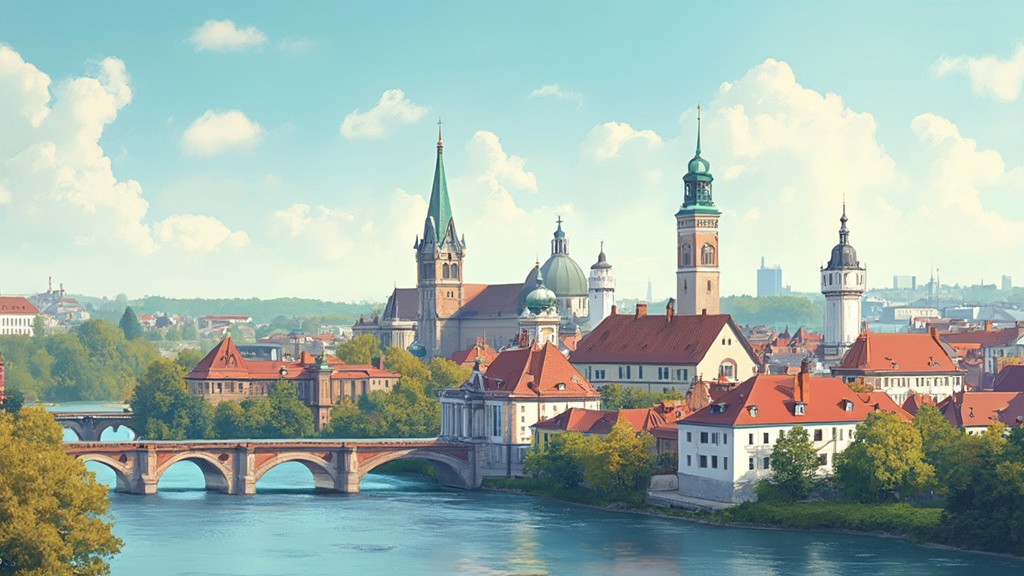
Munich (München) is Germany at its most enjoyable. The Bavarian capital delivers everything visitors imagine when they dream of Germany—beer halls echoing with oompah bands, royal palaces dripping with gold, pristine parks, and the Alps visible on clear days. Yet beyond the stereotypes lies a sophisticated city of world-class museums, cutting-edge technology, and a quality of life that consistently ranks among Europe's highest.
Why Visit Munich
Munich offers an irresistible combination:
- Beer Culture - Legendary beer halls and 180+ beer gardens
- Royal Heritage - Wittelsbach palaces, treasures, and gardens
- World-Class Museums - From Old Masters to BMWs
- Alpine Proximity - Mountains visible from the city, reachable in an hour
- Quality of Life - Clean, efficient, beautiful living
- Traditional Festivals - Oktoberfest, Christmas markets, Starkbierfest
- Culinary Excellence - From white sausage to Michelin stars
- Green Spaces - English Garden, Nymphenburg, Isar riverbanks
Best Time to Visit
Spring (April-May)
Munich awakens after winter with beer garden openings and outdoor café life. The Starkbierfest ("Strong Beer Festival") in March offers an authentic alternative to Oktoberfest. Temperatures climb (8-18°C), cherry blossoms bloom in Nymphenburg, and locals celebrate being outside again.
Summer (June-August)
The finest season. Warm weather (20-28°C), endless beer garden sessions, swimming in the Isar, and the Alps beckoning for day trips. The city operates outdoors. Book accommodations early—Munich is popular.
Autumn (September-October)
Oktoberfest dominates late September into early October, transforming the city. Outside the festival, fall colors grace the English Garden, cultural season begins, and temperatures remain pleasant (10-18°C). Book months ahead for Oktoberfest period.
Winter (November-February)
Cold (0-8°C) but magical. Munich's Christmas markets are among Germany's finest, beer halls offer cozy refuge, and skiing is 90 minutes away. Museums are peaceful, and the city feels authentically local.
Beer Halls & Beer Gardens
Understanding Beer Culture
Munich's beer culture is the city's heart. This is where lager was invented, where six major breweries operate under strict purity laws dating to 1516, and where beer gardens provide public living rooms for 180+ days per year.
Legendary Beer Halls
-
Hofbräuhaus
- World's most famous beer hall
- Yes, it's touristy—and absolutely essential
- Oompah music, liter steins, long tables
- Original brewery founded 1589
- Multiple floors and garden
-
Augustiner Bräustuben
- Local favorite, less touristy
- Direct from wooden barrels
- Traditional food excellent
- More Bavarian than tourist atmosphere
-
Paulaner am Nockherberg
- Home of Starkbierfest
- Excellent Paulaner beer
- Beautiful garden setting
- Traditional Bavarian cuisine
-
Weißes Bräuhaus
- Schneider Weisse wheat beer home
- Traditional weisswurst breakfast spot
- Cozy, wood-paneled interior
- Off the main tourist path
Essential Beer Gardens
-
Augustiner-Keller
- Most beloved beer garden
- Under ancient chestnut trees
- Self-service section (bring own food)
- Perfect summer evenings
-
Hirschgarten
- Europe's largest beer garden (8,000 seats)
- Deer park adjacent
- Family-friendly atmosphere
- Traditional brewery food
-
Chinesischer Turm (English Garden)
- Iconic pagoda setting
- Huge, lively atmosphere
- Tourist-friendly but authentic
- Perfect after garden walks
-
Seehaus
- Lakeside in English Garden
- Elegant atmosphere
- Excellent food
- Sunset views over water
-
Viktualienmarkt Beer Garden
- Central location
- Rotating breweries
- Surrounded by food market
- Convenient, quality experience
Beer Garden Rules
- Self-service sections allow you to bring your own food (but buy the beer)
- Sit at tables without tablecloths for self-service
- Maß (1 liter) is standard size
- "Radler" is beer with lemon soda
- Raise your glass and say "Prost!"
- Sundays and holidays are busiest
Royal Munich
Residenz
The Wittelsbach dynasty's city palace is overwhelming in the best way. One of Europe's largest palace complexes, the Residenz grew over 600 years into a labyrinth of courtyards, gardens, and richly decorated rooms.
Must-See:
- Antiquarium - Renaissance hall with grotesque frescoes
- Treasury - Bavarian crown jewels
- Cuvilliés Theatre - Rococo perfection
- Court Garden - Peaceful retreat
- Plan half day minimum
Nymphenburg Palace
The summer palace of the Wittelsbach rulers sprawls across elaborate gardens northwest of the center. The main palace alone impresses, but the park—with its pavilions, waterways, and peaceful paths—is the real treasure.
Highlights:
- Great Hall - Rococo magnificence
- Gallery of Beauties - King Ludwig I's painted favorites
- Amalienburg - Hunting lodge masterpiece
- Pagodenburg - Chinoiserie pavilion
- Park - French and English gardens
- Free entry to grounds
Schloss Schleißheim
Often overlooked, this palace complex north of Munich rivals Nymphenburg. Three palaces, extensive gardens, and fewer crowds make it worth the trip.
Museums & Culture
World-Class Art
-
Alte Pinakothek
- Old Masters collection
- Dürer, Rubens, Rembrandt
- One of world's finest collections
- Don't miss Dürer self-portraits
- Allow several hours
-
Neue Pinakothek
- 19th-century art
- Impressionists, Van Gogh
- Currently closed for renovation
- Check reopening date
-
Pinakothek der Moderne
- Modern and contemporary art
- Design and graphics collections
- Architecture museum included
- Four museums in one building
-
Lenbachhaus
- Blue Rider expressionism
- Kandinsky, Marc, Macke
- Best collection of the movement
- Beautiful villa setting
Science & Technology
-
Deutsches Museum
- World's largest science museum
- Original artifacts, not replicas
- Full-size ships, planes, mines
- Plan full day
- Overwhelming in best way
-
BMW Welt & Museum
- Automotive dreams realized
- Brand experience center (free)
- Museum (paid) traces history
- Factory tours available
- Architecture alone worth visiting
Other Notable Museums
- Nazi Documentation Center - Essential modern history
- Bavarian National Museum - Cultural artifacts
- Villa Stuck - Art Nouveau gem
- Museum Five Continents - Ethnographic collection
Museum Tips
- Sunday €1 entry at state museums
- Museum passes available for multiple days
- Avoid Monday (many closed)
- Pinakothek area clusters major museums
Neighborhoods to Explore
Altstadt (Old Town)
Munich's historic heart, anchored by Marienplatz and radiating outward through pedestrian shopping streets and traditional restaurants.
Must-See:
- Marienplatz - Central square, glockenspiel
- Frauenkirche - Onion-domed landmark
- Viktualienmarkt - Gourmet food market
- Michaelskirche - Renaissance church
- Asamkirche - Baroque fantasy
Schwabing
Once bohemian artist quarter, now upscale but still creative. The streets around the university and Leopoldstraße host cafés, bookshops, and a student atmosphere.
Experience:
- Café culture
- Gallery hopping
- English Garden access
- Evening bar scene
- Sidewalk people-watching
Maxvorstadt
Munich's museum district and university quarter. Intellectual, architectural, and packed with galleries and cafés serving creative types.
Discover:
- Pinakothek museums
- Kunstareal (art district)
- Independent bookshops
- Student cafés
- Architectural highlights
Haidhausen
Across the Isar from the old town, Haidhausen offers village-like charm with local restaurants, the French Quarter atmosphere, and access to the riverside.
Local favorites:
- Wiener Platz market
- Bordeauxplatz (French Quarter)
- Müller'sches Volksbad (Art Nouveau bath)
- Excellent restaurants
- Less touristy dining
Glockenbach & Gärtnerplatz
Munich's most creative neighborhoods, combining LGBTQ+ scene, independent shops, excellent restaurants, and evening bar culture.
The scene:
- Gärtnerplatz - Theater square, evening hangout
- Independent boutiques
- Natural wine bars
- Diverse nightlife
- Young, creative energy
Outdoor Munich
English Garden
One of world's largest urban parks—bigger than Central Park. This is where Munich comes to breathe, from surfers on the Eisbach wave to sunbathers (often nude) to beer garden celebrations.
Highlights:
- Eisbach Wave - Famous urban surfing spot
- Chinesischer Turm - Pagoda beer garden
- Monopteros - Greek temple viewpoint
- Japanese Tea House - Weekend ceremonies
- Seehaus - Lakeside restaurant
- Endless walking, cycling, relaxing
Isar River
Munich's river has been renaturalized and reclaimed for recreation. Swim in summer, barbecue on the banks, or simply walk the riverside paths.
Best spots:
- Flaucher - Popular swimming and barbecue area
- Marienklause - Beer garden and nature
- Isar Kiesstrand - Urban beach atmosphere
- Running and cycling paths throughout
Olympic Park
The 1972 Olympics left Munich with remarkable architecture and permanent recreational space. The tent-roof stadium and tower remain iconic.
Activities:
- Tower observation deck
- Stadium roof climbing tours
- Summer concerts
- Swimming complex
- Winter ice skating
Traditional Food
Essential Dishes
-
Weisswurst (White Sausage)
- Munich's iconic breakfast
- Eaten before noon (traditional)
- Sweet mustard, pretzel, Hefeweizen
- Proper technique: "zuzeln" (sucking from casing)
-
Schweinsbraten (Roast Pork)
- Bavarian Sunday dinner
- Crispy crackling essential
- Served with dumplings, cabbage
- Beer hall staple
-
Schweinshaxe (Pork Knuckle)
- Enormous, crispy, satisfying
- Tourist favorite for reason
- Pair with Dunkel (dark beer)
- One portion feeds two
-
Obatzda
- Creamy cheese spread
- Camembert, butter, paprika, onions
- Beer garden essential
- With pretzels and radishes
-
Leberkäse
- Meat loaf (no liver, despite name)
- Served in Semmel (roll)
- Street food favorite
- With sweet mustard
-
Käsespätzle
- Bavarian mac and cheese
- Egg noodles, cheese, fried onions
- Comfort food perfection
Where to Eat Traditional
- Wirtshaus in der Au - Beloved for dumplings
- Schneider Bräuhaus - Weisswurst breakfast
- Spatenhaus - Elegant Bavarian
- Augustiner am Dom - Central, authentic
- Andechser am Dom - Monastery beer, good food
Modern Dining
Munich's food scene extends far beyond tradition:
- Multiple Michelin-starred restaurants
- Excellent international options
- Thriving brunch culture
- Asian cuisines well represented
- Farm-to-table movement growing
Oktoberfest
Understanding the Wiesn
Oktoberfest ("the Wiesn" to locals) is the world's largest folk festival, drawing over 6 million visitors annually. Running late September through early October, it combines massive beer tents, carnival rides, and centuries of tradition.
What to Know
The Tents:
- 14 major tents, each with character
- Hofbräu-Festzelt - Most international
- Augustiner-Festhalle - Most traditional
- Käfer Wiesn-Schänke - Celebrity scene
- Schottenhamel - Opening ceremony tent
Practical Reality:
- Tent seats must be reserved (tables of 8-10)
- Standing areas available but chaotic
- Arrive early (before noon) on weekdays
- Dress in Tracht (dirndl/lederhosen) to fit in
- Book accommodation months ahead
- Prices are premium for everything
Alternatives:
- Starkbierfest (March) - Local, authentic
- Frühlingsfest (May) - Small spring festival
- Auer Dult - Traditional market, three times yearly
Day Trips from Munich
Alpine Escapes (1-2 Hours)
-
Neuschwanstein Castle
- Ludwig II's fairy-tale castle
- Most photographed in Germany
- Book tickets online (essential)
- Combine with Hohenschwangau
- 2 hours from Munich
-
Zugspitze
- Germany's highest peak (2,962m)
- Cable car to summit
- Panoramic Alpine views
- Year-round snow
- 90 minutes to Garmisch
-
Berchtesgaden
- Königssee (stunning lake)
- Eagle's Nest (Hitler's mountaintop retreat)
- Salt mine tours
- Alpine beauty
- 2 hours from Munich
-
Salzburg (Austria)
- Mozart's birthplace
- Sound of Music locations
- Old town UNESCO site
- 90 minutes by train
- Full day recommended
Bavarian Towns
-
Rothenburg ob der Tauber
- Medieval town perfection
- Completely preserved walls
- Night Watchman tours
- 2.5 hours from Munich
-
Nuremberg
- Imperial castle
- Nazi rally grounds documentation
- Christmas market (winter)
- 1 hour by ICE train
-
Regensburg
- UNESCO medieval town
- Roman heritage
- Stone Bridge landmark
- 1 hour from Munich
-
Augsburg
- Renaissance architecture
- Fuggerei (oldest social housing)
- Roman history
- 30 minutes from Munich
Practical Information
Getting Around
Public Transport:
- Excellent U-Bahn, S-Bahn, tram, and bus
- MVV integrated ticketing
- Airport connected by S-Bahn
- Day passes and weekly tickets available
- Bayern-Ticket for regional trips
On Foot:
- Center very walkable
- Most attractions in Old Town reachable
- Flat terrain
- Well-signed pedestrian areas
By Bike:
- Excellent bike infrastructure
- MVG Rad bike-sharing
- English Garden paths
- Popular with locals
From the Airport
Munich Airport is 40km northeast:
- S-Bahn S1/S8 to center (40 minutes)
- Lufthansa Airport Bus (45 minutes)
- Taxi €70-80 to center
- Efficient connections
Money Matters
- Euros (€)
- Cash often preferred at traditional places
- Cards accepted at most establishments
- ATMs throughout
- Tipping 5-10% customary
Safety
Munich is extremely safe:
- One of Germany's safest cities
- Tourist areas well-patrolled
- Normal urban awareness applies
- Oktoberfest crowds require extra vigilance
Hidden Gems
Secret Spots
-
Asam Church (Asamkirche)
- Private chapel, public access
- Baroque excess perfected
- Free entry, often missed
- Five minutes from Marienplatz
-
Alter Nordfriedhof
- Tranquil old cemetery
- Local jogging path
- Peaceful contemplation
- Schwabing neighborhood
-
Deutsches Jagd- und Fischereimuseum
- Hunting and fishing museum
- Odd but fascinating
- Famous Wolpertinger creatures
- Historic church building
-
Hofgarten
- Royal garden behind Residenz
- Peaceful arcades
- Free entry
- Morning tai chi groups
-
Theatinerkirche Interior
- Yellow Baroque outside, white inside
- Stunning contrast
- Quiet contemplation
- Often overlooked
Local Tips
- Reserve beer garden tables with tablecloths only
- Weisswurst breakfast is serious tradition
- English Garden nudity is normal
- Sunday everything closes (plan ahead)
- FC Bayern Munich match day transforms city
Photography Spots
Best Views
- Marienplatz Glockenspiel - Classic Munich shot
- Frauenkirche towers - Iconic onion domes
- English Garden Monopteros - Skyline panorama
- Olympic Tower - Complete city view
- Nymphenburg Canal - Palace reflection
Golden Hour
- Marienplatz facing Rathaus
- Englischer Garten Eisbach surfers
- Isar riverbanks
- Viktualienmarkt early morning
- Residenz Hofgarten
Conclusion
Munich delivers on every promise Germany makes to visitors—and then surprises with its sophistication, quality, and livability. The beer halls are as boisterous as legend suggests, the palaces as opulent, the mountains as accessible. But it's the everyday pleasures that linger: morning weisswurst with a wheat beer, afternoon in a sun-dappled beer garden, evening stroll along the Isar as Alpine peaks catch the last light.
This is Germany at its most inviting, Bavaria at its most proud, and a city that makes visitors feel immediately at home.
Prost!
FAQ
Is Munich safe for tourists?
Munich is one of Germany's safest cities. Normal urban awareness applies, but violent crime is rare and tourist areas are well-patrolled. Oktoberfest crowds require extra attention to belongings.
How many days do you need in Munich?
Three to four days allows for Old Town, museums, beer culture, and a day trip. Two days covers highlights. A week allows deep exploration of neighborhoods and multiple excursions.
Do you need cash in Munich?
Traditional beer halls and some restaurants prefer cash. Cards are increasingly accepted, but carrying euros is wise, especially at markets and smaller establishments.
When is Oktoberfest?
Late September through the first Sunday of October (16-18 days). Dates vary slightly each year. The festival runs regardless of weather.
Can you visit the Alps from Munich?
Absolutely—this is a major draw. Garmisch-Partenkirchen is 90 minutes away, Zugspitze accessible as a day trip, and mountain lakes like Tegernsee reachable in an hour. The Alps are visible from Munich on clear days.