

Hidden Gems in Tuscany Beyond Florence and Pisa
Tuscany is one of the most visited regions in Europe, and for obvious reasons. But if your Italian itinerary tracks Florence → Pisa → Siena and back, you're hitting the greatest hits while the real hidden gems in Tuscany sit quietly somewhere else—harder to reach by public transit, less polished for mass tourism, and precisely for those reasons far closer to the Tuscany that actually exists.
These five towns don't appear on most first-timer itineraries. They reward a rental car and a willingness to leave the tour bus circuit: weathered hilltops, artisans working in the same trades their grandparents did, landscapes legally protected from development, and restaurants where the owner still knows which farm raised the steak.
The best approach is a loose southern arc from Florence—Volterra to the southwest, then Pienza and Bagno Vignoni in the Val d'Orcia, then east to Anghiari, with Pitigliano as a detour into the wild Maremma. You'll need a car. You'll be glad you have one.
When to Visit Tuscany's Hidden Gems
Best months: April to early June brings wildflowers, green valleys, and mild temperatures. September and October are arguably better—harvest season, golden afternoon light, and even fewer tourists than peak summer.
Skip: July and August midday heat; many local shops close mid-August for Ferragosto. Bagno Vignoni's thermal experience is actually at its best from October through March—cold air makes the steam dramatic in a way that summer heat simply doesn't.
Spring notes: If these towns are part of a broader European trip, we cover the seasonal case in our best spring destinations in Europe guide.
Volterra: Etruscans, Alabaster, and Eroding Cliffs
Most travelers doing the Florence–Siena–San Gimignano triangle miss Volterra entirely—despite it sitting just 30 km from San Gimignano and being significantly more interesting. Volterra is one of the oldest continuously inhabited cities in Tuscany, with Etruscan roots that predate Rome by centuries.
The town is built on a volcanic plateau, and at its western edge the cliffs of Le Balze are actively eroding—swallowing Etruscan necropolises, Roman baths, and medieval churches into the valley below. Walk Via Lungo Le Mura del Mandorlo at sunset, following the ancient walls west toward the cliff edge. Most visitors stay in the central piazza and never find this path. The abandoned Camaldolese abbey clinging to the cliff edge is visible from here, slowly going over the edge like everything else.
Inside town, the Museo Etrusco Guarnacci is one of the oldest public museums in Europe. The star artifact is the Ombra della Sera—Shadow of Evening—an elongated Etruscan bronze figure so eerily attenuated it looks like a Giacometti sculpture made two millennia before Giacometti. Entry is covered by the Volterra Card (€23 adults, valid three consecutive days, covers six sites including the Roman Theatre and Palazzo dei Priori tower).
Volterra is also where alabaster has been carved continuously since the Etruscans quarried it here. At alab'Arte on Via Orti Sant'Agostino, you can book a hands-on workshop with third-generation artisans—about €30 for two hours. This is a working atelier, not a tourist demonstration; the pieces being made around you will end up in galleries.
Don't leave without: Pici al tartufo—the thick hand-rolled pasta with truffle sauce that defines this part of Tuscany. Expect €12–18 a plate at the trattorias off the main square. Osteria La Pace is consistently the best value.
Getting there: About 1.5 hours from Florence by car (80 km). Public transit is complicated—no direct connection from Florence or Siena; a car is strongly recommended.
Pienza: The World's Only Utopian Renaissance City
In the 1460s, Pope Pius II did something singular: he hired an architect to demolish his birth village and rebuild it from scratch as a perfect Renaissance city. The result—Pienza—is a 600-year-old urban planning experiment, and it looks almost exactly as designed.
The cathedral, Palazzo Piccolomini, and central piazza were built to a geometric plan intended to embody Renaissance ideals of harmony and proportion. The Pope's own palace has a hanging garden on its south loggia, cantilevered over the Val d'Orcia valley—one of the great under-visited Renaissance moments in Italy. Entry to the palazzo is €7.
Pienza also sits inside the Val d'Orcia, UNESCO World Heritage Landscape since 2004 and the first cultural landscape ever listed—meaning the rolling hills, cypress allées, and stone farmhouses are themselves legally protected. The cypress-lined road on the SP146 between Pienza and San Quirico d'Orcia is one of the most photographed stretches of road in Italy. Drive it at golden hour, not midday.
On Corso Rossellino—the 200-meter main street—nearly every third shop is a cheese vendor. Pecorino di Pienza is legally distinct from generic Pecorino Toscano: sheep grazed on Val d'Orcia herbs, aged in ash or honey or hay. At Marusco e Maria (No. 21, selling since 1974), the cheese is aged in a cave beneath the shop. Buy a wedge and eat it on the town walls above the valley.
For film fans: the opening landscape sequence of Ridley Scott's Gladiator (2000) was shot in the Val d'Orcia near Pienza. A 10-minute walk from the main car park along the town walls gets you to the viewpoint.
Combine with: Bagno Vignoni, 8 km away—these two form a natural half-day loop.
Bagno Vignoni: The Village With a Thermal Pool for a Piazza
There is nowhere in Italy quite like Bagno Vignoni. The village has roughly 30 permanent residents and almost no history visible above ground. But at its center—where a fountain or church would normally anchor a Tuscan town—sits a vast rectangular Renaissance thermal pool: 49 by 29 meters, fed by 52°C sulfurous springs that have been used since Roman times.
Pope Pius II, Saint Catherine of Siena, and Lorenzo the Magnificent all bathed here. You can't swim in the central pool today (it's protected), but the water flows south into the Parco dei Mulini—a free park where the thermal overflow runs through medieval mill ruins and down the hillside in open cascades. Locals wade here. Watch your footing: the mineral deposits make every stone surface glass-smooth.
The spa hotels offer day access to proper thermal pools. Hotel La Posta (formerly Albergo Posta Marcucci), which borders the historic piazza, runs a day spa package around €130 per person—two thermal pools, sauna, short massage, towels. Book ahead, especially October through April.
The timing trick: arrive before 8am. The thermal steam rising off the pool in cold morning light, with no other visitors present, is one of the most cinematic sights in all of Tuscany. By 10am, tour coaches from Siena have arrived. The Soviet director Andrei Tarkovsky filmed a key scene of Nostalghia (1983) in this piazza—a man carrying a lit candle across the drained pool. That film is why serious travelers make the detour.
For lunch: La Bottega di Cacio on the main square does local cheese and charcuterie boards with wine. For dinner, drive to Pienza (8 km)—Bagno Vignoni proper has almost no evening dining.
Anghiari: The Battle Leonardo Lost
Eastern Tuscany—the Valtiberina, the upper Tiber valley—gets almost no international tourist attention, and Anghiari benefits entirely from that. It's a listed Borgo più bello d'Italia (one of Italy's Most Beautiful Villages), with stone arches, a 13th-century campanile, and a view over the Tiber plain that stretches to the Umbrian hills.
The town's name is inseparable from one of history's greatest lost artworks. The Battle of Anghiari in 1440—a decisive Florentine defeat of Milan—was the subject of Leonardo da Vinci's most ambitious fresco, commissioned for Florence's Palazzo Vecchio. The work was later destroyed or plastered over; what survives are contemporary copies, most famously a Rubens drawing. The Museo della Battaglia e di Anghiari (Palazzo della Battaglia, recently renovated with EU funding) reconstructs the event, the painting, and the man. Entry is inexpensive—around €3–5—and the museum is genuinely affecting for anyone who has ever read about the lost fresco.
Anghiari is also Italy's center for wood restoration and antique furniture. The Scuola di Restauro (School of Restoration) is based here, and the side streets off Via Garibaldi are lined with working workshops—live restoration in progress, not a heritage display. You can walk in, watch, and occasionally buy.
Of all the towns in this list, Anghiari is the most accessible without a car: Trenitalia runs frequently from Florence to Arezzo (about 1 hour on the Florence–Rome main line), and a regional bus connects Arezzo to Anghiari in roughly 45 minutes. If you're combining rail travel with this part of Italy, our guide to Europe's most scenic train journeys covers the Arezzo corridor.
Where to eat: Ristorante Nena is Anghiari's most consistently recommended table—ivy-covered stone exterior, pasta with truffle and mushrooms, around €20–30 per person. For a grander setting, Castello di Sorci (a restored castle a few kilometers outside town) does traditional Valtiberina cuisine.
Insider access: Walk down to the Campaccio plain below the town walls—the flat field of the Sovara and Tiber rivers where 30,000 men fought in 1440. Almost no travel guides mention it. Standing on the actual battlefield costs nothing and most tourists never find the signposted road down.
Pitigliano: The Town That Grew Out of a Cliff
The southern Maremma—the volcanic hills south of Siena—is Tuscany's least visited and most otherworldly corner. Pitigliano sits in the middle of it, a city of 3,500 built entirely on a tufa cliff, looking from a distance like a medieval fortress that simply grew out of the rock.
The town's deeper story is underground. From the 15th to 17th century, Pitigliano had one of Italy's most significant Jewish communities—large enough that the town became known as "La Piccola Gerusalemme" (Little Jerusalem). Fleeing persecution elsewhere, the community carved its entire infrastructure into the tufa: synagogue, ritual bath, kosher wine cellar, unleavened bread oven, dye works, butcher. The guided tour of the Jewish Quarter runs about an hour through this underground labyrinth and is one of the most haunting and under-known heritage experiences in Tuscany.
In the countryside surrounding Pitigliano, the Vie Cave are Etruscan hollow roads—corridors up to 20 meters deep carved into the tufa bedrock, some stretching over a kilometer, connecting settlements and burial grounds while remaining completely invisible at surface level. Walking a via cava is the closest most travelers will physically get to the Etruscan world.
The local wine—Bianco di Pitigliano DOC—is one of Italy's earliest DOC designations, grown in volcanic soils that give it a mineral edge you won't find in wines from the Val d'Orcia.
Getting there: A car is essential. About 2 hours from Florence, 1.5 from Siena. Approach from the west on the SP4 from Sorano for the most dramatic first view of the town erupting from the cliff edge.
Practical Tips for Driving Hidden Tuscany
- Rent a car. Four of these five towns are not practically reachable by public transit. The drives themselves—through the Crete Senesi, the Val d'Orcia, the Maremma—are part of the experience.
- Book lunch in advance. In small villages, lunch is the main meal. The best trattoria tables fill by 12:30pm. Call ahead, even for casual places.
- Download offline maps. Mobile signal in the Maremma and the Val d'Orcia hills is patchy. Download your route before leaving a major town.
- Carry cash. Many smaller museums, workshops, and market stalls are cash-only.
- Check Ferragosto (Aug 10–20). Italian businesses—including some restaurants and workshops—close during the August holiday. Verify before making a detour.
For the broader Italy context—Rome, Venice, Amalfi, visas, and transport between regions—we have a complete Italy travel guide that covers the whole country.
Tuscany's most iconic views—the cypress-lined roads, the rolling clay hills, the tufa cliffs above the Maremma—exist entirely outside the Florence–Pisa triangle. They're waiting for anyone willing to drive an hour past the last tour bus stop.
Ready to plan your southern Tuscany loop? Browse our complete Italy travel guide for logistics, regional overviews, and tips on getting around the country.
Related Posts
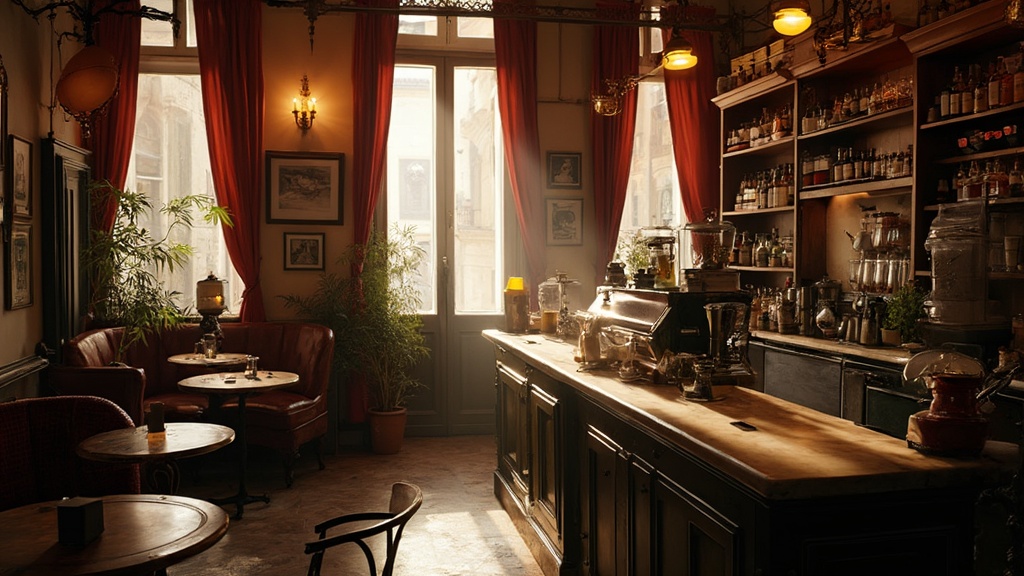
Hidden Coffee Shops in Rome: 12 Local Cafés Tourists Never Find
Skip the tourist trap espresso bars and discover where Romans actually drink their morning coffee - from vintage literary cafés to secret neighborhood roasteries.

5 Tips to Save Money on Flights in 2026
Booking windows, alliance hacks, and mistake fare alerts — five updated strategies that are genuinely saving travelers $200–$500 on flights in 2026.

Tokyo Nightlife: From Golden Gai to Shibuya Sky
Your complete Tokyo nightlife guide: from Golden Gai's 200 micro-bars to Kabukicho neon, live music in Shimokitazawa, and rooftop views from Shibuya Sky.