Edinburgh Travel Guide 2026: Scotland's Dramatic Capital
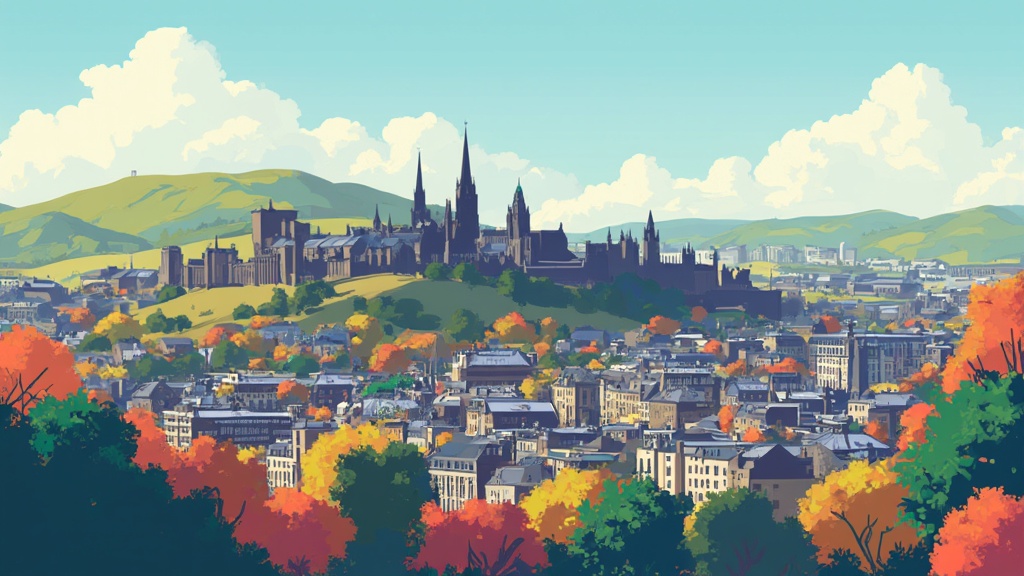
Edinburgh earns every superlative thrown at it. Built on ancient volcanoes, draped in Gothic spires and Georgian elegance, haunted by centuries of history both triumphant and tragic—Scotland's capital creates an atmosphere no other British city quite matches. The castle dominates the skyline like a director's vision of medieval power. The Royal Mile descends through the Old Town's warren of closes and courtyards. The New Town's symmetrical streets demonstrate Enlightenment rationalism in stone. And every August, the world's largest arts festival transforms the entire city into an open stage. Edinburgh operates on a different register than most destinations.
Why Visit Edinburgh
Edinburgh works as both a city break and a base for Highland exploration. The concentration of history—from the Stone of Destiny to Mary Queen of Scots' chambers—provides days of discovery. The arts scene punches above its weight year-round, not just during August festivals. The restaurant scene has evolved dramatically, with Scottish ingredients (seafood, game, whisky) inspiring chefs earning serious recognition. And the surrounding landscape—from Arthur's Seat's extinct volcano to the Firth of Forth coastline—offers outdoor experiences within city limits.
The city's compactness makes it supremely walkable, though the hills provide a workout. Two distinct districts—the medieval Old Town and the Georgian New Town—create architectural contrast you'd normally travel between cities to experience. Literary heritage (Robert Burns, Sir Walter Scott, J.K. Rowling, Ian Rankin) infuses streets and pubs. And the whisky—Edinburgh offers access to Scotland's defining spirit, from educational distillery tours to hundreds of pub selections.
Best Time to Visit Edinburgh
Summer/Festival Season (August)
The Edinburgh Festival Fringe, Edinburgh International Festival, and associated events transform the city completely. Performances—comedy, theatre, dance, music—fill every venue imaginable, from grand concert halls to broom closets. Streets become stages. The atmosphere is electric, chaotic, and exhausting. Accommodation prices triple and must be booked months ahead. If festivals draw you, August is unmissable; if you prefer calmer exploration, avoid it.
Spring (April-May)
Edinburgh at its most pleasant. Temperatures reach 10-15°C (50-59°F), days lengthen dramatically, and parks burst into bloom. The Science Festival (April) and Beltane Fire Festival draw visitors without August's intensity. Hotel prices remain reasonable. Many consider this Edinburgh's sweet spot.
Early Summer (June-July)
Warm (14-19°C/57-66°F) with daylight stretching to 10pm. Pre-festival crowds arrive but don't overwhelm. Outdoor activities peak. Jazz & Blues Festival (July) adds cultural programming.
Autumn (September-October)
Post-festival Edinburgh exhales. Crowds thin, colors turn in Princes Street Gardens and on Arthur's Seat, and the city regains local rhythms. Weather remains decent (10-14°C/50-57°F) though increasingly unpredictable.
Winter (November-March)
Cold (2-7°C/36-45°F), dark (sunset before 4pm in December), but dramatically atmospheric. Hogmanay (New Year's Eve) celebrations rank among the world's best—torch processions, concerts, midnight fireworks over the castle. Christmas markets fill East Princes Street Gardens. January-February bring the year's lowest prices.
Top Things to Do in Edinburgh
Edinburgh Castle
The castle dominates Edinburgh physically and historically. Sitting atop Castle Rock—a volcanic plug inhabited for 3,000 years—the fortress witnessed Scottish kings, English sieges, and centuries of military use. The Honours of Scotland (crown jewels), the Stone of Destiny (used for coronations), St. Margaret's Chapel (12th century), and the Great Hall (hammerbeam roof) justify the entry price. The One O'Clock Gun fires daily (except Sundays) at 1pm—a tradition since 1861. Book tickets online to avoid queues; arrive at opening for calmer crowds.
The Royal Mile
The Royal Mile runs from the castle down to Holyrood, connecting Edinburgh's major landmarks along a single spine. But the real rewards come from exploring the closes—narrow alleyways descending from the main street into courtyards and hidden spaces.
St Giles' Cathedral (High Kirk of Edinburgh) anchors the Mile with medieval architecture and John Knox's Protestant Reformation legacy. The Thistle Chapel's intricate woodwork rewards close inspection.
The Real Mary King's Close takes visitors beneath street level through preserved 17th-century streets sealed off after plague. Tours bring Edinburgh's buried history to life.
Gladstone's Land shows how prosperous 17th-century merchants lived—a National Trust property with original painted ceilings.
The Scottish Parliament at the Mile's end represents contemporary Scotland in bold, controversial architecture by Enric Miralles. Free tours explain the design and the Scottish political system.
Holyrood Palace and Park
Palace of Holyroodhouse serves as the Royal Family's official Scottish residence. The State Apartments, Mary Queen of Scots' chambers (where her secretary Rizzio was murdered), and the ruined Holyrood Abbey create powerful historical experiences. Audio tours illuminate the Stuart monarchs' stories.
Holyrood Park wraps around the palace with 260 hectares of hills, lochs, and crags. Arthur's Seat—the extinct volcano rising 251 meters—offers Edinburgh's defining hike. The main path takes 45-60 minutes; the views over the city, Forth, and beyond reward the effort. Salisbury Crags provide dramatic cliff scenery on a shorter walk.
New Town
Contrast the medieval Old Town with the New Town's Enlightenment elegance. Built from the 1760s, this planned Georgian development shows rationalism in urban form: symmetrical streets, mathematical proportions, classical architecture. Charlotte Square demonstrates the idealized vision; George Street and Queen Street run parallel with similar grandeur. Today, the area houses upscale retail, offices, and restaurants. The Scottish National Portrait Gallery (free) holds faces from Mary Queen of Scots to contemporary Scots.
Calton Hill
Rising above the eastern New Town, Calton Hill provides panoramic views for minimal climbing effort. The National Monument—an unfinished Parthenon replica called "Edinburgh's Disgrace"—and the Nelson Monument (climable for more views) create distinctive silhouettes. This is Edinburgh's best sunset spot: castle, Old Town, Arthur's Seat, and the Forth bridges all visible.
Dean Village and Water of Leith
Hidden in a valley minutes from the West End, Dean Village feels like rural Scotland transplanted into the city. Former mill buildings cluster around the Water of Leith river. The walkway follows the water from Stockbridge to Leith—a multi-mile escape from urban bustle. The Scottish National Gallery of Modern Art sits along the route.
Where to Stay in Edinburgh
Best for First-Timers
Old Town places you amid the Royal Mile's atmosphere, steps from the castle and major sights. Hotels range from budget to boutique. Expect noise from pubs below and stairs everywhere—lifts are rare in centuries-old buildings.
Best for Atmosphere
Grassmarket sits below the castle in what was once the city's market and execution ground. Today, pubs, restaurants, and independent shops fill the square. Accommodation here captures Old Town character with slightly easier access than the Mile itself.
Best for Elegance
New Town offers Georgian townhouse hotels, less medieval chaos, and closer proximity to high-end restaurants. Slightly less central for Old Town sights, but Princes Street and the gardens connect both districts easily.
Best for Budget
Leith (Edinburgh's waterfront district, 2 miles north) has regenerated dramatically. Hotels and hostels cost less than central options; restaurants rival anywhere in the city; buses connect quickly to the center. The Ocean Terminal area offers chain hotels at lower rates.
Edinburgh Food and Drink
Scottish Cuisine
Haggis deserves a fair trial. The national dish—sheep's pluck with oatmeal, spiced and traditionally encased in stomach lining—sounds challenging but tastes rich and satisfying. Modern preparations often skip the stomach casing. Try it with "neeps and tatties" (turnips and potatoes) and whisky sauce.
Cullen Skink is Scotland's essential soup: smoked haddock, potatoes, and cream create comfort in a bowl.
Scottish Salmon appears everywhere—smoked, cured, or fresh. The quality exceeds most global sources.
Full Scottish Breakfast adds black pudding, haggis, and tattie scones to the full English formula.
Restaurants
The Kitchin holds a Michelin star for Scottish fine dining—seasonal, local, technically excellent. Tom Kitchin's "from nature to plate" philosophy showcases Scottish ingredients at their peak.
Restaurant Martin Wishart earned Edinburgh's first Michelin star and maintains it with French-inflected excellence in Leith.
Timberyard transforms a former warehouse into a showcase for modern Scottish cuisine with industrial-chic atmosphere.
The Dogs does casual Scottish dining at prices that don't require special occasions.
Ondine specializes in sustainable Scottish seafood—oysters, lobster, and the catch of the day.
Whisky
Edinburgh offers comprehensive whisky education:
The Scotch Whisky Experience (beside the castle) provides excellent introductions to Scottish whisky regions, production, and tasting.
The Bow Bar stocks over 300 whiskies in an old-fashioned pub setting—staff guide selections patiently.
The Jolly Judge hides down a close with solid selection and cozy atmosphere.
Whiski Rooms on the Royal Mile pairs whisky education with Scottish food.
Getting Around Edinburgh
Walking
Edinburgh rewards walking more than any UK city outside central London. Old Town and New Town cluster compactly. The hills—Castle Rock, Calton Hill, Arthur's Seat—provide elevation but manageable grades. Wear sturdy shoes; cobblestones and closes are uneven.
Buses
Lothian Buses cover the city efficiently and affordably. Buy a day ticket for unlimited travel. The airport bus (Airlink 100) connects to the center in 25 minutes. Trams run from the airport to Princes Street.
Cycling
The city has improved cycling infrastructure, though hills and cobbles challenge casual riders. Hire bikes cover some areas; the Water of Leith path offers car-free riding.
Day Trips from Edinburgh
Rosslyn Chapel (30 minutes by bus) features extraordinary medieval stone carving that inspired Dan Brown's Da Vinci Code. The chapel's Green Man carvings and mysterious symbolism fuel endless speculation.
South Queensferry and the Forth Bridges (30 minutes by train) offers waterfront charm and views of three engineering icons: the Victorian Forth Bridge, the Forth Road Bridge, and the new Queensferry Crossing.
St Andrews (90 minutes by bus) combines the Old Course (golf's birthplace), medieval university atmosphere, ruined cathedral, and beaches.
Stirling (one hour by train) rivals Edinburgh for castle drama—Stirling Castle's hilltop position and William Wallace history make compelling day trips.
The Borders (various destinations) offer abbey ruins (Melrose, Jedburgh, Kelso), rolling countryside, and accessible Scottish landscapes.
The Highlands can be tasted via day tours to Loch Ness, Glencoe, or the Trossachs—though overnight trips do them better justice.
Edinburgh Festival Season
August transforms Edinburgh. Multiple festivals overlap:
The Edinburgh Fringe is the world's largest arts festival—thousands of shows, predominantly comedy and theatre, performed in every conceivable space. Anyone can perform; quality ranges from brilliant to bizarre. The Royal Mile becomes an endless parade of flyer-distributing performers.
Edinburgh International Festival programs curated high-culture performances—classical music, opera, theatre, dance—in major venues. The EIF represents establishment excellence; the Fringe represents democratic chaos.
Edinburgh International Book Festival fills Charlotte Square with authors, talks, and literary programming.
Military Tattoo performs nightly on the castle esplanade—pipes, drums, and military displays against the castle backdrop. Tickets sell months ahead.
Surviving August: Book accommodation far in advance, accept higher prices, plan shows ahead for highlights but leave time for spontaneous discoveries, and expect crowds everywhere. Outside August, Edinburgh offers the same architecture and attractions with far more breathing room.
Practical Information
Money
British Pounds (£). Scotland issues its own banknotes, which are legal tender throughout the UK (though English businesses sometimes hesitate to accept them). Cards work everywhere.
Weather
Edinburgh weather is famously changeable. Expect four seasons in one day. Layers are essential; waterproof jacket advisable year-round. Wind can be brutal, especially on exposed hills.
Safety
Edinburgh is very safe. Standard city precautions apply. The Old Town can get rowdy on weekend nights (particularly around Cowgate) but rarely dangerly.
Insider Tips
The best castle views often come from elsewhere: Calton Hill for distance perspective, the Vennel (a steep close off Grassmarket) for dramatic framing, or the Mound for straight-on symmetry.
Skip Royal Mile restaurants at dinner—most target tourists. Walk five minutes in any direction for better value and quality.
Arthur's Seat sunrise beats sunset for solitude and light. The hill gets crowded on nice weekend afternoons.
The National Museum of Scotland (free, Chambers Street) is among Britain's best—allow several hours for the Scottish history galleries and roof terrace views.
For whisky without pretension, ask pub staff what they'd drink themselves. Most happily guide newcomers away from expensive bottles toward better values.
FAQ
How many days do you need in Edinburgh?
Three to four days covers major sights, a day trip, and neighborhood exploration. During August festivals, extend to a week to absorb the cultural explosion.
Is Edinburgh expensive?
Moderately by UK standards; less than London, more than northern England. August festival season sees price spikes. Outside peak times, reasonable deals exist.
Is Edinburgh walkable?
Yes, but hilly. The Old Town involves constant climbing; the New Town stays relatively flat. Good walking shoes are essential.
Can you drink tap water?
Absolutely—Scottish tap water is excellent. Edinburgh's comes from the Pentland Hills reservoirs.
Is Edinburgh worth visiting outside festival season?
Absolutely. August brings the festivals but also crowds and prices. Many travelers prefer Edinburgh's atmosphere in spring or autumn, with room to breathe and lower costs.