Chicago Travel Guide 2026: The Great American City
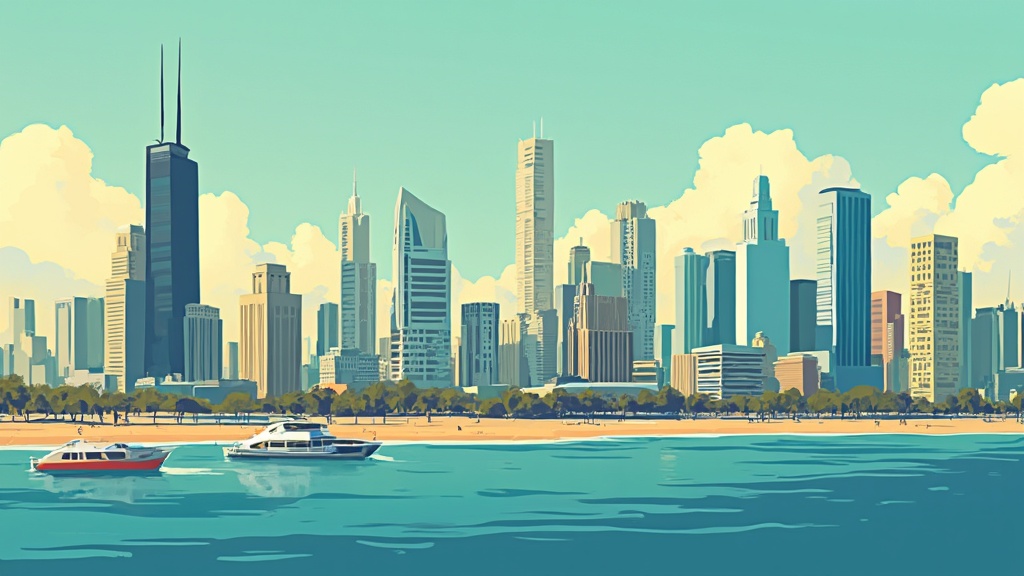
Chicago doesn't try to be New York, and that's precisely its strength. America's third-largest city has forged its own identity: birthplace of the skyscraper, home to architecture that defines modern cities worldwide, keeper of blues and jazz traditions, perfector of uniquely regional foods, and steward of one of the world's great art collections. All of this unfolds along 26 miles of Lake Michigan shoreline that functions as Chicago's front yard—beaches, parks, and a waterfront rivaling any coastal city. Chicago feels like a city that built itself, not for tourists or status, but because Chicagoans wanted it that way.
Why Visit Chicago
Architecture alone justifies the trip. The Great Fire of 1871 leveled the city; the rebuild attracted visionary architects who invented the modern skyline. Frank Lloyd Wright, Louis Sullivan, Mies van der Rohe—the names read like a syllabus for 20th-century architecture, and their work still stands. The Chicago Architecture Center's boat tours aren't tourist kitsch; they're essential education.
Beyond buildings, Chicago offers world-class museums that would anchor smaller cities as solo destinations. The Art Institute holds Impressionist masterpieces, American classics, and contemporary works in a collection rivaling the Met and MoMA. The Field Museum, Shedd Aquarium, and Museum of Science and Industry fill rainy days (and many sunny ones).
The food scene ranges from iconic (deep-dish pizza, Chicago-style hot dogs, Italian beef) to innovative (a thriving chef-driven restaurant culture with Michelin stars and James Beard Awards). The music heritage—blues, jazz, house music—lives in clubs and venues still operating. And the neighborhoods offer distinct personalities: Lincoln Park's tree-lined streets, Wicker Park's hipster energy, Pilsen's Mexican-American culture, Hyde Park's intellectual atmosphere around the University of Chicago.
Best Time to Visit Chicago
Summer (June-August)
Chicago summer is glorious. Temperatures range 20-30°C (68-86°F), the lakefront fills with beachgoers, and outdoor festivals dominate the calendar. Taste of Chicago, Lollapalooza, street fairs, and free concerts in Millennium Park create a city in celebration. Hotels fill and prices rise, but Chicago in summer rewards the investment.
Spring (April-May)
The city thaws and blooms. Temperatures climb from 10-15°C (50-59°F) in April to 18-24°C (64-75°F) by May. Baseball season opens at Wrigley Field. Outdoor patios emerge. Crowds thin compared to summer, but the energy picks up.
Autumn (September-October)
Perhaps Chicago's most underrated season. September maintains summer warmth (18-24°C/64-75°F); October brings crisp fall air and autumn colors. Football season arrives. The summer crowds depart, but the weather holds. Many locals call fall Chicago's best kept secret.
Winter (November-March)
Brutal but beautiful. Temperatures average -5 to 5°C (23-41°F), with wind chill making it feel colder ("The Windy City" earns its nickname). Snow covers the city. But Chicago doesn't hibernate—restaurants thrive, museums offer warmth, and hardy locals embrace frozen lake views. Christmas lights, the Christkindlmarket, and indoor attractions make winter viable for visitors who pack properly.
Top Things to Do in Chicago
Architecture
Chicago Architecture Center River Cruise ranks among America's best tours. Ninety minutes on the Chicago River, passing downtown skyscrapers while docents explain everything from foundation engineering to design philosophy. Book ahead during peak season; multiple daily departures exist.
Frank Lloyd Wright's Home and Studio (Oak Park, accessible by L train) shows where Wright developed Prairie Style architecture. Tours reveal his ideas, lifestyle, and influence. Oak Park holds numerous Wright-designed homes; walking tours connect several.
The Rookery Building downtown features a Wright-designed lobby—a masterpiece of light and ironwork visible during business hours (free).
Willis Tower (Sears Tower) still commands respect at 442 meters. The Skydeck on the 103rd floor includes the "Ledge"—glass boxes extending four feet from the building. Vertigo-inducing views reward the queue and cost.
360 Chicago (John Hancock Center) offers similar heights with "TILT"—glass enclosures that lean you outward over the city. Many prefer the Hancock's views, which face downtown rather than away from it.
Museums
The Art Institute of Chicago demands a full day. The Impressionist collection—Seurat's Sunday on La Grande Jatte, numerous Monets, Van Goghs, and Renoirs—alone justifies hours. American art, contemporary galleries, and the Thorne Miniature Rooms add depth. Free to Illinois residents on certain days; always free on Thursday evenings.
The Field Museum houses Sue, the largest and most complete T. rex skeleton; Egyptian mummies; and natural history spanning human cultures and geological ages.
Shedd Aquarium brings marine life from around the world to Lake Michigan's shore. The aquatic shows, Caribbean reef, and beluga whales fill hours.
Museum of Science and Industry in Hyde Park ranks among the world's largest science museums. The captured German U-505 submarine, the coal mine experience, and interactive exhibits engage all ages.
Museum Campus combines the Field Museum, Shedd Aquarium, and Adler Planetarium on a lakefront peninsula. A single day can hit highlights of all three, though each deserves more.
Parks and Lakefront
Millennium Park anchors downtown's public space. Cloud Gate (The Bean)—Anish Kapoor's reflective sculpture—has become Chicago's symbol. Crown Fountain's video-projection faces, the Frank Gehry-designed Pritzker Pavilion (free summer concerts), and Lurie Garden create a world-class urban park.
Grant Park extends south from Millennium Park, hosting major festivals (Taste of Chicago, Lollapalooza) and Buckingham Fountain's massive water displays.
The Lakefront Trail runs 18 miles along Lake Michigan—runners, cyclists, and walkers share the path. Beaches dot the route (North Avenue Beach, Oak Street Beach for downtown access; Montrose for more space).
Lincoln Park stretches four miles north of downtown with the free Lincoln Park Zoo, conservatory, harbor, and neighborhood restaurants.
The 606 (Bloomingdale Trail) converts an elevated rail line into an urban greenway—2.7 miles of path connecting northwest neighborhoods.
Neighborhoods
The Loop is downtown Chicago: skyscrapers, the Art Institute, Millennium Park, and the elevated "L" trains that give the area its name.
River North offers high-end galleries, restaurants, and nightlife north of the Loop.
Lincoln Park combines the park with surrounding tree-lined streets, Victorian homes, and a neighborhood atmosphere convenient to downtown.
Wicker Park/Bucktown delivers hipster Chicago: vintage shops, coffee roasters, craft cocktails, and indie music venues.
Pilsen showcases Mexican-American culture through murals, taquerias, and the National Museum of Mexican Art (free).
Hyde Park revolves around the University of Chicago, offering intellectual atmosphere, the Museum of Science and Industry, and the Obama family's neighborhood.
Chinatown spreads south of downtown with authentic restaurants and Chinatown Square shopping.
Where to Stay in Chicago
Best for First-Timers
The Loop / Magnificent Mile puts you amid attractions: Michigan Avenue shopping, Millennium Park, the Art Institute, and Chicago River architecture. Hotels range from chains to luxury properties. Expect downtown prices but save on transport.
Best for Nightlife
River North / West Loop combine upscale dining (Randolph Street's Restaurant Row) with nightlife options. The West Loop has emerged as Chicago's culinary epicenter.
Best for Neighborhoods
Lincoln Park offers village atmosphere with quick L train access to downtown. Tree-lined streets, local restaurants, and the park itself create a residential base.
Wicker Park suits visitors seeking creative energy, coffee culture, and nightlife without the Loop's scale.
Best for Budget
Hostels (HI Chicago downtown) and budget chains (Hyatt Place, Hampton Inn) in areas slightly outside the Loop offer savings. The L train connects everything.
Chicago Food Guide
Iconic Chicago Foods
Deep-Dish Pizza defines Chicago pizza debates. Lou Malnati's, Giordano's, and Pequod's attract fierce loyalists. The cheese-under-tomato sauce, thick-crust format requires a knife, fork, and patience—these pizzas take 45 minutes. Worth the wait.
Chicago-Style Hot Dog demands precision: an all-beef hot dog on a poppy seed bun, topped with yellow mustard, chopped onions, sweet relish, a dill pickle spear, sport peppers, tomato slices, and celery salt. No ketchup—ever. Portillo's and Devil Dawgs serve classic versions.
Italian Beef Sandwich layers thin-sliced beef on crusty bread, topped with sweet peppers or hot giardiniera, then dipped in jus. Al's #1 Italian Beef claims authenticity; Johnnie's Beef has its partisans.
Garrett Popcorn combines caramel corn and cheese corn in the "Chicago Mix"—sweet-salty perfection.
Restaurant Scene
Chicago's dining scene earns national recognition. Alinea holds three Michelin stars for avant-garde, experience-driven dining. Girl & the Goat, Au Cheval (legendary burger), and Avec represent the West Loop's rise.
Smyth and Oriole earn Michelin stars; Topolobampo has championed Mexican fine dining for decades. Reservations essential for famous names; walk-ins work at neighborhood spots.
For casual excellence: Publican (beer-focused, pork-heavy), Big Star (tacos and whiskey in Wicker Park), Portillo's (Chicago fast food done right).
Markets and Food Halls
Revival Food Hall (The Loop) gathers quality quick-service options downtown. Chicago French Market (West Loop) offers grab-and-go breakfast and lunch. Green City Market (Lincoln Park, seasonal) showcases local and organic producers.
Getting Around Chicago
The L
Chicago's elevated train system is iconic and practical. Eight lines cover the city; the Loop circuit defines downtown. Ventra cards work on L trains and buses; pay per ride or buy day passes. The Blue Line runs to O'Hare Airport (45 minutes, cheap); the Orange Line reaches Midway.
Buses
Fill gaps the L misses, particularly east-west routes. Same Ventra cards work.
Rideshare and Taxis
Uber and Lyft operate widely; traditional taxis exist but have diminished. Useful for late nights and areas between L stops.
Walking
Downtown and neighborhoods are walkable; distances between areas require transport. The Lakefront Trail offers walking and biking along the lake.
Water Taxis
Seasonal water taxis run along the river—useful for reaching attractions and combining transport with sightseeing.
Music in Chicago
Chicago's music heritage runs deep:
Blues found its electric voice here. Buddy Guy's Legends (owned by the blues legend himself) and Kingston Mines (dual stages) keep the tradition alive.
Jazz thrives at the Green Mill (a Prohibition-era speakeasy that still feels authentic) and Andy's Jazz Club.
House Music was invented in Chicago in the 1980s. Smart Bar and various DJ nights maintain the legacy.
For major concerts: United Center (massive arena shows), Chicago Theatre (historic venue), Thalia Hall (Pilsen gem), and Metro (legendary indie rock).
Day Trips from Chicago
Milwaukee (90 minutes by Amtrak or car) offers breweries, the lakefront, and distinct Midwest city atmosphere.
Starved Rock State Park (90 minutes by car) provides canyon hiking and waterfalls—Illinois' top nature destination.
Indiana Dunes National Park (one hour by South Shore Line train) delivers beaches and dune hiking on Lake Michigan's southern shore.
Galena (2.5 hours by car) preserves 19th-century main street charm with antique shops, B&Bs, and Ulysses S. Grant history.
Practical Information
Money
US Dollars ($). Cards accepted virtually everywhere. Tipping 15-20% at restaurants is standard; tip bartenders, taxi/rideshare drivers, and hotel staff as customary in America.
Language
English. Chicago's diversity means many languages spoken in neighborhoods.
Safety
Downtown and tourist areas are safe. Some neighborhoods have crime concerns—visitors rarely encounter them. Standard city awareness applies: don't flash valuables, stay aware at night, use rideshare from unfamiliar areas.
Weather Preparedness
Winter requires serious layering: insulated coat, hat, gloves. Wind chill regularly hits -20°C (-4°F). Summer can bring heat and humidity. Spring/fall are most comfortable.
Insider Tips
Skip Willis Tower in favor of 360 Chicago (Hancock Center) for superior views—you look toward downtown rather than away from it, and lines are shorter.
Architecture boat tours beat walking tours for comprehensive downtown coverage, but walking tours through neighborhoods (Wicker Park, Pilsen) provide depth the boats can't.
For deep-dish without the wait, try lunch—restaurants are emptier, and the pizza is identical.
The free Lincoln Park Zoo is genuinely excellent—not just a free alternative but a legitimate attraction.
Take the L, especially the Brown Line through downtown and north—elevated views provide free architectural sightseeing.
FAQ
How many days do you need in Chicago?
Four to five days covers major museums, architectural highlights, neighborhood exploration, and iconic foods. Weekend trips hit highlights but leave much undiscovered.
Is Chicago safe for tourists?
Yes, in tourist areas. Crime exists but concentrates in areas visitors don't typically visit. Downtown, the lakefront, and popular neighborhoods feel safe.
When is Chicago too cold to visit?
January-February test endurance, but indoor attractions remain excellent. Dress appropriately and embrace it, or avoid December-March.
Is Chicago cheaper than New York?
Yes—hotels, food, and entertainment cost less on average. Not a budget destination, but money stretches further than in NYC or LA.
Can you get around Chicago without a car?
Absolutely. The L train and rideshare cover everything tourists need. A car is unnecessary and parking is expensive.