
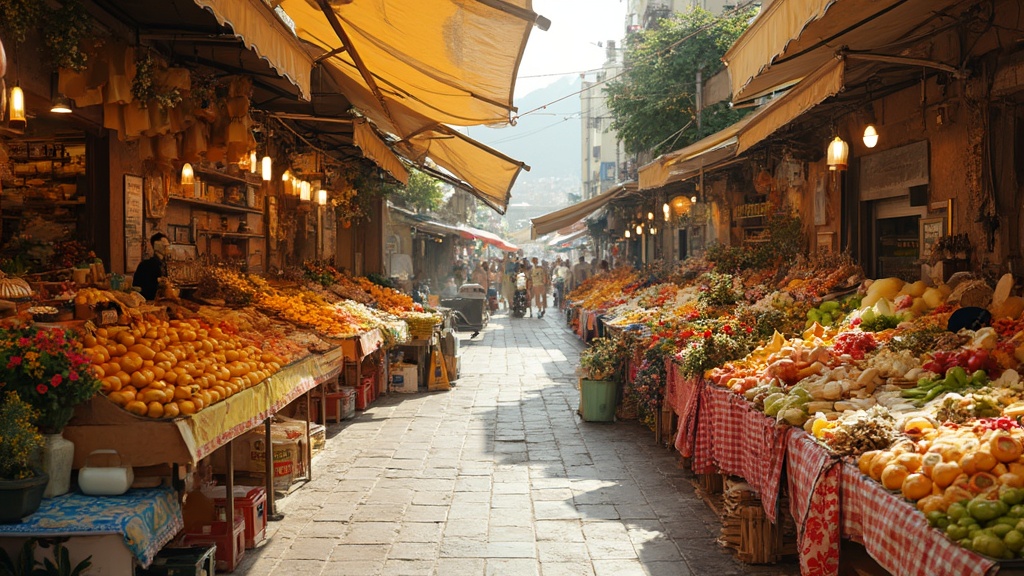
Best Local Markets in Europe: A Food Lover's Guide to Authentic Finds
Best Local Markets in Europe: A Food Lover's Guide to Authentic Finds
There's a moment in every great trip when you stop being a tourist and start feeling like a temporary local. For many travelers, that moment happens at a market - somewhere between a cheese stall and a pile of strange-looking mushrooms you've never seen before.
European markets aren't just places to buy food. They're social hubs, history lessons, and culinary adventures rolled into one. Some have been operating for centuries. Others feel like they've barely changed since your grandmother's grandmother haggled over the price of tomatoes.
This guide covers the markets worth planning your morning around - the ones where locals outnumber tourists and where you'll leave with a full stomach and probably a questionable amount of cured meats.
Why Local Markets Beat Supermarkets (Every Time)
Before diving into specific markets, let's talk about why they matter:
- Seasonal authenticity: Markets sell what's actually in season, not what's been shipped from another hemisphere
- Human connection: You'll learn more about a place chatting with a cheese vendor than reading a museum plaque
- Better prices: Often cheaper than supermarkets for quality produce
- Zero plastic: Bring your own bag and skip the packaging
- Breakfast sorted: Most markets have stalls serving fresh food you can eat on the spot
Spain: La Boqueria, Barcelona
Location: La Rambla, 91, Barcelona
Best time to visit: Weekday mornings, 8-10am
La Boqueria gets called "touristy" a lot. And yes, by midday it's packed with selfie sticks. But arrive early and it's still a working market where Barcelona's chefs do their shopping.
What to try:
- Fresh juice at any of the front stalls (the passion fruit mix is legendary)
- Jamón ibérico sliced to order
- Sea urchin if you're feeling adventurous
- Pilar's famous chickpeas - look for the small stall near the back
Pro tip: Walk past the first row of stalls. The deeper you go, the more authentic (and affordable) it gets. The vendors at the back have been there for generations.
Hungary: Great Market Hall, Budapest
Location: Vámház körút 1-3, Budapest
Best time to visit: Saturday morning for the full experience
This isn't just a market - it's a cathedral to Hungarian food. The 19th-century iron structure houses three floors of everything from fresh produce to embroidered tablecloths your grandmother would love.
Ground floor essentials:
- Paprika in every variety (buy the smoked version, trust me)
- Mangalica pork products
- Fresh langos from the stalls upstairs
- Pick sausages and kolbász
What most visitors miss: The basement fish market. It's wonderfully chaotic and sells the freshest carp and catfish for traditional Hungarian dishes.
Lunch move: Head upstairs for a plate of langos (fried dough) topped with sour cream and cheese. It's not health food, but you're on vacation.
France: Marché des Enfants Rouges, Paris
Location: 39 Rue de Bretagne, Paris 3rd
Best time to visit: Weekend brunch time (but go hungry)
Paris has dozens of markets, but this one in the Marais is the oldest covered market in the city - operating since 1615. It's small, it's crowded, and it's absolutely worth the squeeze.
What makes it special:
- Ready-to-eat food from around the world (Moroccan, Japanese, Italian, Lebanese)
- A proper sit-down atmosphere despite being a market
- Wine by the glass while you people-watch
- Organic produce from local farms
The move: Grab a table at the Moroccan stall, order the lamb tagine with couscous, and pair it with wine from the vendor next door. This is what eating in Paris should feel like.
Italy: Mercato di San Lorenzo, Florence
Location: Piazza del Mercato Centrale, Florence
Best time to visit: Morning for produce, any time for the upstairs food hall
Florence's central market is split into two experiences: the ground floor raw ingredients market and the upstairs gourmet food hall. Both are worth your time.
Ground floor finds:
- Fresh truffles (in season)
- Aged pecorino and parmigiano
- Wild boar salami
- Fresh pasta by the kilo
Upstairs food hall:
- Open until midnight (rare for Italian markets)
- Individual stalls from famous Florentine food names
- The lampredotto sandwich (tripe, if you dare) from Nerbone
Budget tip: Skip the upstairs if you're watching euros. Buy bread, cheese, and salumi from the ground floor vendors and picnic by the Arno.
Portugal: Mercado da Ribeira (Time Out Market), Lisbon
Location: Av. 24 de Julho 49, Lisbon
Best time to visit: Late lunch or early dinner
The Time Out Market half of Mercado da Ribeira is a modern food hall with curated vendors. Some purists complain it's too polished, but the quality is genuinely excellent and it's a brilliant introduction to Portuguese cuisine.
Can't-miss stalls:
- Sea Me for fresh seafood and oysters
- Manteigaria for pastel de nata straight from the oven
- Café de São Bento for steaks
- Santini for gelato that rivals Italian versions
The local side: The traditional market still operates in the mornings (until 2pm). Go early for fish, flowers, and fruit before the food hall crowds arrive.
Netherlands: Albert Cuypmarkt, Amsterdam
Location: Albert Cuypstraat, Amsterdam
Best time to visit: Weekday afternoons (avoid Saturday madness)
Forget the touristy floating flower market. Albert Cuyp is where Amsterdam actually shops - a 260-stall open-air market that's been running since 1905.
What to seek out:
- Stroopwafels made fresh (not the packaged airport kind)
- Raw herring from the fish stalls (the Dutch way: raw, with onions)
- Indonesian food from the various take-away stalls
- Gouda cheese aged to your preference
The vibe: Working-class, multicultural, slightly chaotic. You'll hear more Dutch than English here, and the prices reflect local expectations rather than tourist budgets.
Austria: Naschmarkt, Vienna
Location: Wienzeile, Vienna 6th district
Best time to visit: Saturday for the flea market extension
Vienna's Naschmarkt stretches for over a kilometer and has been feeding the city since the 16th century. The architecture alone is worth the visit - art nouveau pavilions housing everything from Austrian classics to Middle Eastern spices.
Market highlights:
- Fresh bread and pastries from traditional bakeries
- Käsekrainer (cheese-filled sausages) from the stands
- Pickles and preserved vegetables
- Saturday flea market for vintage finds
Insider knowledge: The market gets progressively more "ethnic" as you walk east - more Turkish, Vietnamese, and Indian stalls. Some of the best food is at this end, and prices drop too.
England: Borough Market, London
Location: 8 Southwark Street, London SE1
Best time to visit: Thursday or Friday for fewer crowds than Saturday
Borough Market is London's most famous food market, and while it's undeniably popular with tourists, the quality of vendors keeps serious food people coming back.
Worth the queue:
- Bread Ahead doughnuts (the salted caramel is absurd)
- Neal's Yard Dairy for British cheese education
- Brindisa for Spanish imports
- Kappacasein for the famous raclette
Strategy: Come hungry, eat your way through samples, and buy ingredients you can't find elsewhere. The olive oil, cheese, and charcuterie selections rival specialty shops.
Belgium: Marché du Midi, Brussels
Location: Around Gare du Midi, Brussels
Best time to visit: Sunday morning (it only happens Sundays)
Europe's largest market sets up every Sunday morning around Brussels' southern train station. It's massive, chaotic, and wonderfully real.
What you'll find:
- North African spices and tagine pots
- Fresh fish at prices that shame fishmongers elsewhere
- Cheap clothing and household goods
- The best mint tea you'll have outside Morocco
The experience: This isn't a gentrified food hall. It's a working market serving the diverse communities of Brussels. Come with an open mind and comfortable shoes.
Market Survival Tips
General rules that apply everywhere:
- Bring cash. Many vendors, especially traditional ones, don't take cards
- Bring your own bag. Plastic bags are disappearing across Europe
- Go early. Best selection, fewer crowds, vendors have energy to chat
- Learn basic phrases. "How much?" and "One of those, please" in the local language goes far
- Don't be afraid to point. Works everywhere, no language needed
- Ask for samples. Cheese and charcuterie vendors expect it
- Buy less than you think. Quality over quantity, always
Markets Worth a Detour
A few more that didn't make the main list but deserve mentions:
- Mercado de San Miguel, Madrid - touristy but gorgeous building, great for tapas grazing
- Markthalle Neun, Berlin - Thursday's Street Food Thursday is legendary
- Torvehallerne, Copenhagen - small but perfectly curated Nordic food
- Mercado do Bolhão, Porto - historic market recently renovated, still authentic
- Viktualienmarkt, Munich - beer garden in the middle of a market, very German
When Markets Aren't Markets
A word of caution: some "markets" are now essentially food courts with good lighting. Nothing wrong with them, but if you want authentic local shopping:
- Look for produce alongside prepared food
- Check if locals are buying groceries or just eating
- Morning hours usually mean more actual market activity
- If everything has the same aesthetic design, it's probably a curated food hall
Both can be excellent - just know what you're getting.
Plan Your Market Mornings
The best travel days often start at a market. You'll eat well, discover local specialties, and get a genuine sense of how people actually live in each city.
Skip one museum. Wake up early. Go where the locals go.
Your stomach will thank you.
Related Posts
Hidden Coffee Shops in Rome: 12 Local Cafés Tourists Never Find
Skip the tourist trap espresso bars and discover where Romans actually drink their morning coffee - from vintage literary cafés to secret neighborhood roasteries.
Complete United Kingdom Travel Guide 2026
From London's iconic landmarks to Scotland's misty highlands, discover everything you need to plan your perfect UK adventure.
Top 10 Rooftop Bars in Budapest: Sky-High Drinks with Stunning Views
Discover Budapest's best rooftop bars for 2026 - from hidden gems with Parliament views to trendy terraces overlooking the Danube, your ultimate guide to drinking above the city.