
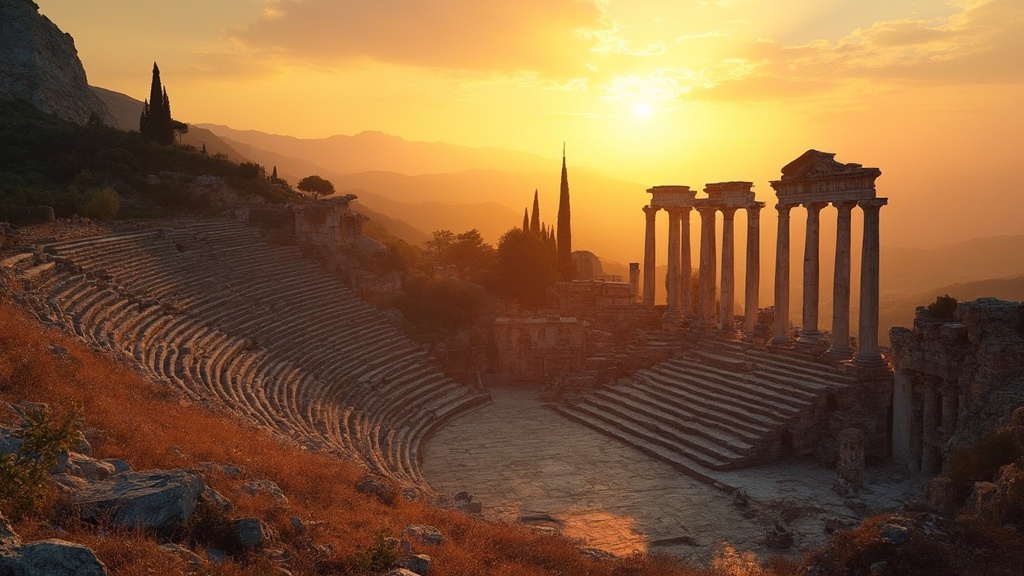
Ancient Ruins in Turkey: 12 Archaeological Sites That Will Take Your Breath Away
Ancient Ruins in Turkey: 12 Archaeological Sites That Will Take Your Breath Away
Turkey sits at the crossroads of civilizations, and its landscape is scattered with the remnants of empires that shaped human history. From Greek temples to Roman theaters, from the world's oldest known temple to cities carved into volcanic rock, Turkey offers an archaeological journey unlike anywhere else on Earth.
Whether you're a history enthusiast or simply someone who loves standing among ancient stones and imagining the lives once lived there, these 12 sites will leave you speechless.
1. Ephesus - The Crown Jewel
Location: Near Selçuk, Izmir Province
Best For: First-time visitors, Roman history buffs
Time Needed: Half day
Ephesus isn't just Turkey's most famous archaeological site - it's one of the best-preserved ancient cities in the Mediterranean world. Walking down its marble-paved streets, you're literally following in the footsteps of Mark Antony, Cleopatra, and the Apostle Paul.
Must-See Highlights:
- Library of Celsus: The iconic two-story facade, once housing 12,000 scrolls
- Great Theatre: A 25,000-seat amphitheater with stunning acoustics
- Terrace Houses: Remarkably preserved Roman villas with original mosaics and frescoes (separate ticket, absolutely worth it)
- Temple of Hadrian: Elegant Corinthian columns and intricate reliefs
Pro Tips:
- Enter through the upper (south) gate to walk downhill through the city
- Arrive at 8 AM opening or after 4 PM to avoid cruise ship crowds
- The Terrace Houses cost extra (~60 TL) but are the hidden treasure of Ephesus
- Combine with the nearby Temple of Artemis (one of the Seven Wonders) and the House of Virgin Mary
Entry Fee: ~400 TL (main site) + ~60 TL (Terrace Houses)
2. Göbekli Tepe - The World's Oldest Temple
Location: Near Şanlıurfa, Southeast Turkey
Best For: Ancient history enthusiasts, those seeking mind-bending discoveries
Time Needed: 2-3 hours
Forget everything you thought you knew about human civilization. Göbekli Tepe, dating back 12,000 years, predates Stonehenge by 6,000 years and the Egyptian pyramids by 7,000 years. Built by hunter-gatherers before the invention of agriculture or writing, this site rewrites human history.
What You'll See:
- Massive T-shaped pillars up to 5 meters tall, weighing 10-20 tons
- Intricate animal carvings: foxes, lions, snakes, scorpions, vultures
- Circular enclosures that may have served religious or astronomical purposes
- Only about 5% of the site has been excavated - the rest remains underground
Why It Matters: This discovery challenged the assumption that complex society required agriculture. It suggests that the desire to build temples may have actually driven the development of farming - not the other way around.
Pro Tips:
- Visit the Şanlıurfa Archaeology Museum first to see artifacts and context
- The site is covered by a modern roof structure for protection
- Mornings are best to avoid heat (summer temperatures can exceed 40°C)
- Combine with a trip to the ancient city of Harran nearby
Entry Fee: ~100 TL
3. Pergamon (Bergama) - City of Science and Culture
Location: Bergama, Izmir Province
Best For: Those interested in Hellenistic culture, medicine, and engineering
Time Needed: Half day
Pergamon was one of the great cultural centers of the ancient world, rivaling Alexandria. It gave us parchment (the word comes from "Pergamon"), advanced medical practices, and one of the steepest theaters ever built.
Must-See Highlights:
- Acropolis: Take the cable car up for spectacular views and the famous theater
- Theater: The steepest ancient theater in the world (capacity: 10,000)
- Sanctuary of Athena: Where the famous Pergamon Altar once stood (now in Berlin)
- Asklepion: An ancient healing center, one of the first medical schools
Pro Tips:
- The cable car (teleferik) saves a steep 20-minute climb - worth it
- Don't skip the Asklepion in the lower town - it's where Galen practiced medicine
- Visit the Red Basilica, a massive Roman temple later converted to a church
- Bergama town itself is charming; have lunch at a local lokal
Entry Fee: ~200 TL (Acropolis) + Cable car ~80 TL
4. Hierapolis & Pamukkale - Where History Meets Natural Wonder
Location: Denizli Province
Best For: Combining archaeology with natural beauty
Time Needed: Full day
The ancient spa city of Hierapolis sits atop the surreal white travertine terraces of Pamukkale. Romans came here for the thermal waters, and you can still swim among ancient columns in the same mineral-rich pools.
Must-See Highlights:
- Antique Pool (Cleopatra's Pool): Swim among submerged Roman columns
- Necropolis: One of the largest ancient cemeteries, with 1,200+ tombs
- Roman Theater: Beautifully preserved, seats 12,000
- Martyrium of St. Philip: Octagonal church honoring the apostle
Pro Tips:
- Enter from the north gate for less crowds and walk toward the terraces
- The Antique Pool costs extra (~130 TL) but swimming with ancient ruins is surreal
- Bring a plastic bag for shoes - you must walk barefoot on the travertines
- Sunset on the white terraces is magical - time your visit accordingly
Entry Fee: ~400 TL (includes Hierapolis + Pamukkale terraces)
5. Aspendos - The Perfect Roman Theater
Location: Near Antalya
Best For: Theater lovers, photography enthusiasts
Time Needed: 1-2 hours
If you see only one Roman theater in Turkey, make it Aspendos. Built in 155 AD during Marcus Aurelius's reign, it's considered the best-preserved ancient theater in the world. And it's still used for performances today.
What Makes It Special:
- Seating capacity of 15,000-20,000
- Original stage building completely intact (rare for Roman theaters)
- Acoustics so perfect that a coin dropped on stage can be heard in the back row
- Annual Aspendos Opera and Ballet Festival brings ancient acoustics to life
Pro Tips:
- Check the festival calendar - seeing a performance here is unforgettable
- The rest of the ancient city (aqueduct, basilica) is behind the theater and less crowded
- Combine with nearby Perge and Side for a full ancient ruins day
- Early morning light is best for photography
Entry Fee: ~100 TL
6. Perge - The Grand Entrance
Location: Near Antalya
Best For: Those who love extensive ruins and Roman city planning
Time Needed: 2-3 hours
Perge offers something Ephesus can't: space and peace to wander. This sprawling site features remarkably intact city gates, a massive agora, colonnaded streets, and a 12,000-seat theater - often with hardly any other tourists in sight.
Must-See Highlights:
- Hellenistic Gate: The monumental entrance towers
- Colonnaded Street: 20-meter-wide main avenue lined with shops
- Agora: Vast marketplace with mosaic floors still visible
- Stadium: One of the best-preserved in Anatolia (capacity: 12,000)
Pro Tips:
- The stadium is a 10-minute walk from the main site - don't miss it
- Far less crowded than Ephesus, great for photography
- The on-site museum houses beautiful marble statues found here
- Combine with Aspendos and the Antalya Archaeological Museum
Entry Fee: ~100 TL
7. Troy - Where Legend Meets Reality
Location: Çanakkale Province
Best For: Mythology lovers, those who want to walk through 3,000 years of history
Time Needed: 2-3 hours
For centuries, scholars debated whether Troy was real or pure myth. Then Heinrich Schliemann started digging in 1871, and the legendary city of Homer's Iliad emerged from the earth. Today, you can walk through nine layers of civilization spanning 3,000 years.
What to Expect:
- The famous (reconstructed) Trojan Horse for photos
- Archaeological layers from Troy I (3000 BC) to Troy IX (Roman era)
- The walls that Hector defended and Achilles attacked
- The Troy Museum, one of Turkey's best modern museums
The Reality Check: Troy won't have the grandeur of Ephesus. It's an archaeological dig site where you need imagination and context. Visit the museum first - it transforms the experience.
Pro Tips:
- Start at the Troy Museum (excellent), then visit the site with context
- Join a guided tour or use the audio guide - essential for understanding the layers
- Combine with Gallipoli battlefields for a powerful day trip from Çanakkale
- The sunset from the walls is poetic
Entry Fee: ~150 TL (site) + ~100 TL (museum)
8. Aphrodisias - The Sculptor's City
Location: Aydın Province
Best For: Art lovers, those seeking off-the-beaten-path ruins
Time Needed: 3-4 hours
Aphrodisias was the ancient world's center of marble sculpture, and its riches are only now being fully appreciated. Far from the tour bus routes, this UNESCO site rewards visitors with stunning monuments, an incredible museum, and often complete solitude.
Must-See Highlights:
- Stadium: The best-preserved ancient stadium anywhere (30,000 capacity)
- Tetrapylon: Elaborate gateway with intricate carvings
- Temple of Aphrodite: The city's sacred heart, later converted to a basilica
- Sebasteion: Remarkable reliefs depicting emperors and mythological scenes
- Museum: World-class collection of sculptures found on-site
Pro Tips:
- Plan a full morning or afternoon - this site deserves unhurried exploration
- The museum is one of Turkey's best, don't skip it
- Very few tourists, especially on weekdays
- Combine with Pamukkale (2 hours away)
Entry Fee: ~100 TL
9. Olympos & Chimaera - Ruins and Eternal Flames
Location: Near Antalya
Best For: Adventure seekers, backpackers, those who love nature + history
Time Needed: Full day (including Chimaera at night)
Olympos offers something magical: ancient Lycian and Roman ruins tumbling down a forested valley to a beautiful beach. And nearby, the Chimaera's eternal flames have been burning from the mountainside for at least 2,500 years.
What You'll See:
- Olympos Ruins: Theater, tombs, baths, and temples hidden in forest
- Beach: Swimmable beach where a stream meets the sea among ruins
- Chimaera (Yanartaş): Natural gas vents creating flames that never die
Pro Tips:
- Stay in one of the famous Olympos treehouse camps for the full experience
- Visit the ruins during the day, then hike to Chimaera at night (flames are best in darkness)
- Bring a torch/flashlight for the 30-minute hike to Chimaera
- Don't forget marshmallows to roast on the eternal flames
Entry Fee: ~60 TL each for Olympos and Chimaera
10. Sagalassos - The Mountain City
Location: Burdur Province
Best For: Adventurous travelers, those who want ruins without crowds
Time Needed: 3-4 hours
Perched at 1,500 meters in the Taurus Mountains, Sagalassos feels like discovering a lost world. This remarkably preserved city features the largest Roman fountain ever found, an impressive theater, and views that stretch forever.
Why Visit:
- Antonine Fountain: Massive two-story marble fountain, reconstructed
- Upper Agora: Vast marketplace at a stunning elevation
- Theater: 9,000 capacity with mountain backdrop
- Active excavations mean new discoveries each year
Pro Tips:
- The altitude means cooler temperatures - perfect for summer visits
- Bring sturdy shoes; terrain is uneven
- Combine with the beautiful Salda Lake (Turkey's "Maldives")
- Very few tourists - you might have it to yourself
Entry Fee: ~50 TL
11. Ani - The City of 1,001 Churches
Location: Kars Province, Eastern Turkey
Best For: Medieval history, Armenian architecture, adventurous travelers
Time Needed: 3-4 hours
Ani was once a thriving Silk Road capital of 100,000 people, rivaling Constantinople. Abandoned and forgotten for centuries, it now sits as a haunting ghost city on the Armenian border, its churches and walls slowly returning to the earth.
What You'll See:
- Medieval Armenian churches with intricate stone carvings
- Massive defensive walls that once protected 100,000 inhabitants
- Cathedral of Ani, built in 1001 AD
- Views across the gorge into Armenia
Pro Tips:
- Eastern Turkey requires more planning - consider a guided tour from Kars
- Visit in morning light for the best photography
- Kars itself has fascinating Russian-era architecture
- Combine with Mount Ararat views and the nearby Ishak Pasha Palace
Entry Fee: ~50 TL
12. Cappadocia's Underground Cities
Location: Cappadocia, Central Turkey
Best For: Unique experiences, those fascinated by ancient engineering
Time Needed: 2-3 hours per city
Beneath Cappadocia's famous fairy chimneys lies an even stranger world: underground cities carved up to 8 floors deep, where entire communities could hide from invaders for months at a time.
Best Underground Cities:
- Derinkuyu: Deepest (8 floors), most extensive
- Kaymaklı: Best preserved, connected to Derinkuyu by tunnel
- Özkonak: Smaller but less crowded
What You'll Find:
- Kitchens, storage rooms, wineries, churches
- Ventilation shafts and water wells
- Rolling stone doors that could seal off sections
- Stables for animals on the first levels
Pro Tips:
- Go early to avoid tour groups in narrow passages
- Not recommended for claustrophobic visitors
- Comfortable shoes essential - floors can be uneven
- Combine with the rock-cut churches of Göreme Open-Air Museum
Entry Fee: ~150 TL each
Planning Your Ancient Ruins Itinerary
The Classic Aegean Route (5-7 days)
Istanbul → Troy → Pergamon → Ephesus → Aphrodisias → Pamukkale/Hierapolis
Perfect for first-time visitors. Fly into Istanbul, rent a car, and work your way south along the coast.
The Mediterranean Circuit (4-5 days)
Antalya → Perge → Aspendos → Side → Olympos → Termessos
Base yourself in Antalya and take day trips. Beaches + ruins = perfect combo.
The Off-the-Beaten-Path Adventure (10+ days)
Ephesus → Aphrodisias → Sagalassos → Cappadocia → Göbekli Tepe → Ani
For serious history enthusiasts. Requires more planning but rewards with unforgettable experiences.
Practical Tips for Visiting Ruins in Turkey
Best Time to Visit
- Spring (April-May): Wildflowers, mild weather, fewer crowds
- Fall (September-October): Still warm, crowds thinning after summer
- Avoid: July-August peak heat (40°C+) and cruise ship season
What to Bring
- Sun protection: hat, sunscreen, sunglasses (minimal shade at most sites)
- Water: At least 1.5L per person (vendors at major sites, but overpriced)
- Comfortable walking shoes: Ancient stones are uneven
- Cash: Some smaller sites only accept Turkish Lira
Museum Pass Turkey
Worth considering if visiting multiple sites. The 15-day pass (currently ~1,500 TL) covers major sites including Ephesus, Hierapolis, and most museums. Calculate based on your itinerary.
Guided Tours vs. Self-Guided
- Major sites like Ephesus benefit from guides (context matters)
- Audio guides available at most UNESCO sites
- Hiring a local guide supports the community and enriches your visit
Beyond the Famous Sites
Turkey has hundreds of lesser-known ruins. Favorites of the adventurous:
- Termessos: "Eagle's Nest" city at 1,000m, never conquered by Alexander
- Patara: Longest beach in Turkey with Lycian ruins
- Myra: Rock-cut tombs + Santa Claus connection
- Laodikeia: Extensive city, still being excavated
- Zeugma: Famous mosaics, now in the Gaziantep Museum
Final Thoughts
Turkey's ancient ruins aren't just about old stones - they're portals to civilizations that shaped our world. From the philosophers of Pergamon to the healing practices of Asklepion, from the legends of Troy to the mysteries of Göbekli Tepe, each site offers a unique window into human history.
Take your time. Sit among the columns. Imagine the lives lived here. And remember: you're walking where emperors walked, where gods were worshipped, where the story of humanity was written in marble and stone.
Explore more of Turkey with our Turkey destination guide and Best Time to Visit Turkey.
Related Posts

The Ultimate Istanbul Travel Guide 2024
Everything you need to know about visiting Istanbul, from historical sites to hidden gems.
Hidden Beaches of Turkey: 12 Secret Coastal Gems Beyond the Tourist Crowds
Discover Turkey's most stunning hidden beaches - from secluded Mediterranean coves to untouched Aegean shores that most travelers never find.
Antalya 3-Day Itinerary: Beaches, Old Town, and Epic Day Trips
A practical 3-day Antalya itinerary with the best beaches, Kaleici Old Town, waterfalls, and easy day trips to ancient ruins.